
My leadership philosophy – Part 9: Humility and leadership

Preamble
This article is part of a series in which I'm sharing key lessons I've learned about what drives or derails effective leadership, distilled from my 20 year career assessing and advising executives. Here is an index to previous articles in the series:
- An introduction to the series.
- Part 1: Charismatic/inspirational leadership.
- Part 2: Transformational leadership (mentions two complimentary styles, contingent reward and instrumental leadership).
- Part 3: Tactics leaders can use to project greater charisma.
- Part 4: How relationships contribute to effective leadership.
- Part 5: A review of the role of situational and contextual influences on leadership.
- Part 6: How moderation contributes to effective leadership.
- Part 7: The importance of directionality in leadership, including goals, vision, and purpose.
Introduction
What if admitting weakness was a strength for a leader?
This might be hard to imagine for some. In a few corporate settings, confidence is the fuel that leadership runs on. The ethos might read like... 'I know everything. I'm good at everything. I'm omniscient and see everything. I don't do 'doubt,' I don't even know what that word means. I'm faking it until I make it.' It's all confidence projection, all the time, and surely it's exhausting.
But what happens if the all-knowing leader, for once... ‘doesn’t know’? Should they maintain this veneer of power and competence at all costs, resist giving up their status, and assure followers they know 'the answer' when they're really blind? Or should they expose the crack in their veneer, and the doubt that lies behind it? Should they let their performative armour crash onto the floor at their feet, and risk taking what may feel like an existentially threatening step– admitting doubt, ignorance, or weakness, in the hopes that others in the team might ‘know better.’ For leaders clinging to the fragile theatrics of '24-7 confidence and competence,' climbing down to the level of their followers to announce ‘I’m no better than you, let’s work on this together,’ might feel as easy as renouncing their own name.
And yet this invitation to share leadership, to ask for help, knowledge, ideas, to admit ‘I am human like you are, and I too feel uncertainty’ may generate a kind of collective leadership that wasn’t possible before. It may involve assigning the burden of ‘leadership’ not to a single individual, but to the group, but this time embedded in all it's cumulative strength and wisdom. Perhaps by the leader ceding and then equalizing power, the group can become stronger as they reveal that they might know the path forward even better than the leader.
One way that leaders can initiate responsibility sharing while making full use of the talents in their team, is by expressing humility. In this article I’ll use current research to discuss a) how to define humility, b) whether it contributes to leadership effectiveness, c) how we might explain its positive effects, d) some situations when it might not be a good fit, e) possible risks of expressing humility as a leader, and f) findings on how humility might buffer against the negative impact of narcissism. Towards the end of the piece, I’ll also include g) some practical suggestions, h) survey items you can use the measure humility in yourself and other leaders, and i) sources for further reading.
What is humble leadership?
Researchers define humility in several ways. As I review the various approaches, keep in mind two things.
First, the concept of humility has a long history, and extends back to ancient philosophy. For this article, I’ve focused on more recent treatments of humility, specifically research related to leadership in organizations.
Second, the forms of humility that I review fit into three broad categories: a) observable behaviours (called ‘expressed humility’), b) internal experiences that observers might miss, and c) personality-based traits (believed to be more enduring and stable than the other forms).
Expressed humility
Starting with expressed humility, one research program found it involved three key behaviours (see Owens et al., 2013 in 'Further reading'):
- Willingness to view oneself accurately – involves actively seeking feedback, even if it’s critical; acknowledging when others have more knowledge and skill; and admitting when you don’t know how to do something.
- Showing appreciation of others – involves taking notice of the strengths of others; and complimenting others on their strengths.
- Modeling teachability – involves being willing to learn from others; and being open to ideas and advice from others.
Internal experiences
Another research program described three additional elements of humility which may be ‘quieter’ or harder to observe. These three are sometimes called cognitive or motivational elements of humility (see Ou et al., 2014 in 'Further reading'):
- Low self focus – involves not drawing attention to oneself; keeping a low profile; and not being interested in obtaining fame.
- Self-transcendent pursuit – involves having a sense of personal mission in life; devoting time to the betterment of society; and wanting your work to make the world a better place.
- Transcendent self-concept – involves believing no one is perfect, and that they (i.e., the leader) are no better or worse than others; that there are things in the world that are greater or more significant than them; and that not everything is under their control.
Personality - HEXACO
The above-mentioned dimensions of humility emerged from studies of leaders in organizational contexts. But some argue that humility is a trait that any person can possess, and which is durable throughout adult life.
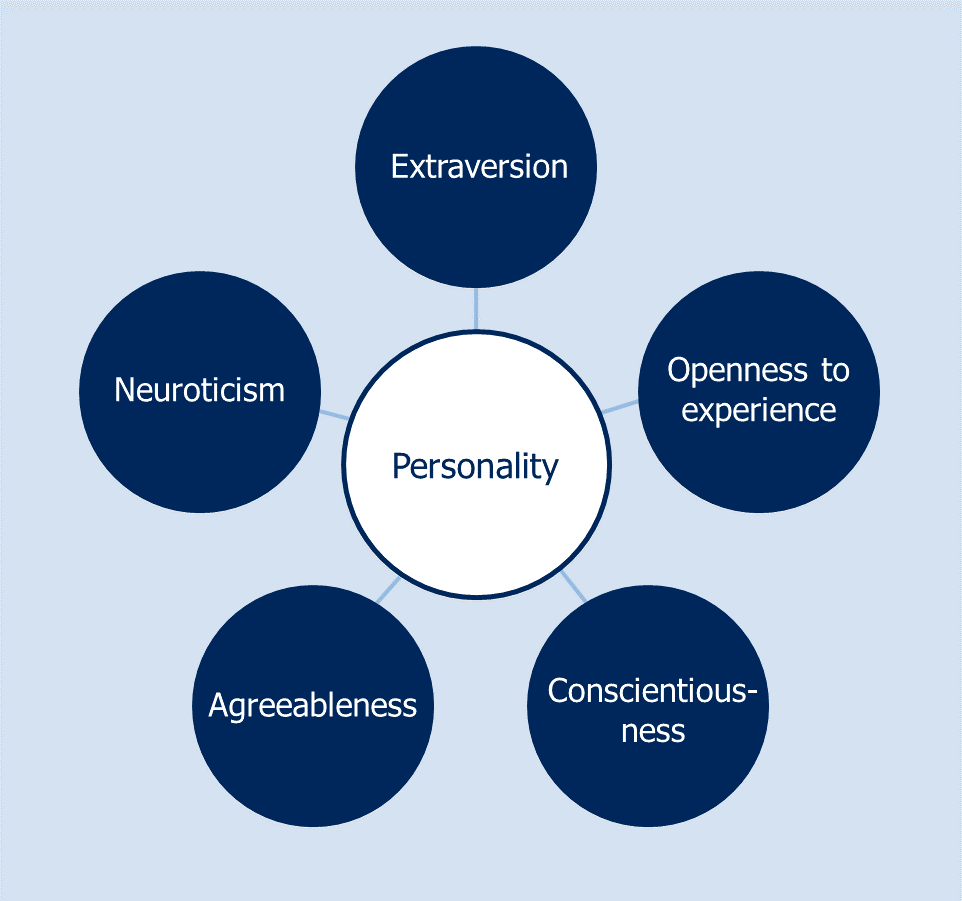
One approach to defining humility as a personality trait, comes from a model called HEXACO. It’s an acronym that stands for each of the traits it measures, including honesty-humility (H), emotionality (E), extraversion (X), agreeableness (A), conscientiousness (C), and openness to experience (O).
The honesty-humility trait – the one we’re most interested in - divides further into four facets or component parts:
- Sincerity – avoiding manipulating others for personal gain.
- Fairness – feeling little temptation to break rules, commit fraud, or engage in corruption.
- Greed-avoidance – being uninterested in lavish wealth and luxuries.
- Modesty – feeling no special entitlement to elevated social status.
 Kibeom Lee, Ph.D., & Michael C. Ashton, Ph.D.
See this website if you’d like to take the HEXACO and measure your own level of humility.
Note that researchers of servant leadership also tend to include humility as a component of their model. I’ve included some of those questionnaire items at the end of the article if you’d like to look at them (see 'Survey items').
 Tim Jackson
If you're interested in how to choose the best personality assessment to support leadership development, this article may be of interest.
Are humble leaders more effective?
Over the last fifteen years, researchers accumulated ample evidence that humility enhances leadership effectiveness.
Two major reviews
Two high quality studies recently examined the influence of humble leadership on followers (see Chandler et al., 2023, and Keleman et al., 2023). One focused on expressed humility, the other on a blend of all three forms of humility (expressed, internal, and personality-based). Both of them aggregated findings across numerous studies to create a kind of overarching estimate of humility's influence on leadership effectiveness.
Based on the two studies, humble leadership contributes to higher levels of these outcomes in followers…
- Commitment to stay with the organization
- Creativity
- Engagement
- Feedback seeking
- Proactive behaviour
- Job performance
- Innovation behaviours
- Knowledge and information sharing
- Employee voice
In addition, humble leadership contributes to lower levels of these outcomes in followers…
- Exhaustion/withdrawal
- Turnover intentions
- Knowledge hiding
- Unethical behaviour
Finally humble leadership also fosters a higher incidence of these group, team, or organizational outcomes…
- Team helping norms
- Ethical culture
- Team performance
- Perceptions of team effectiveness
- Organizational performance
- Innovation and learning
Focusing on personality only
When examining the honesty-humility trait only, there are also some positive findings.
In looking at how the honesty-humility trait impacts leadership, we need to answer two questions: 1) does honesty-humility predict ratings of leadership effectiveness; and 2) does honesty-humility predict effectiveness in unique, differentiated ways, compared to all the other traits we know about?
Well, honesty-humility performs well on both fronts. In a recent meta-analysis, researchers combined all the studies that they could find that examined honesty-humility and leadership (i.e., 8 studies, using 1,045 participants; see Javalagi et al., 2024). They found that honesty-humility predicted leadership effectiveness, and that it did so over and above all the other traits in the HEXACO model (in fact, it beat out other traits in a robust way).
This is a compelling finding. The other traits in the HEXACO model have been measured forever, in hundreds, maybe thousands of studies about leadership. If honesty-humility can add something new after 60 or so years of studying traits and leadership, that’s impressive. This suggests honesty-humility is an important part of the story when describing great leadership.
(The only caveat I’d add is that these results are based on just 8 studies, a small number. We’ll see if this result changes in the coming years we accumulate more findings.)
How might humility enhance leadership?
So how does leader humility translate into all these beneficial outcomes?
Modeling
One explanation is that humble leaders model several positive behaviours that other team members copy, and which then contribute to the team's effectiveness. For example, humble leaders model things like admitting mistakes and limitations, highlighting the strengths of others, and being open to feedback, advice and ideas. Followers might see the leader doing this and start to do the same. If all the followers emulate these humble qualities, people might start acting differently in this super-humble team environment - they might voice their ideas more, disclose the limits of their knowledge/expertise, and learn more efficiently from mistakes. These downstream effects should help the team excel.
Psychological freedom
Another possible explanation for why humble leadership is effective, is that it creates psychological freedom within the team, which frees energy to engage in higher quality interactions. When leaders reduce their impression management, and give up the pretense that they are perfect and all-knowing, this might create psychological freedom in both themselves and others that encourages sharing, collaboration, admitting uncertainty, and learning from each other. Reducing the burden of projecting competence and perfection all the time may offer a ‘release’ and the redirection of energy towards more direct and transparent conversations about problem solving.
Legitimizing uncertainty
A final explanation for humble leaders' positive influence, is that they ‘legitimize uncertainty.’ When leaders admit their own uncertainty, it normalizes the experience and allows followers to acknowledge when they feel it too. This acceptance of uncertainty encourages open, learning-oriented dialogue, but also a culture of experimentation. Instead of rigidly insisting on the ‘right’ decision, humble leaders encourage followers to embrace uncertainty by ‘feeling their way forward’ through experimentation. This creates a spirit of making imperfect decisions in service of sustaining forward momentum, with the intent that ‘whatever happens, we’ll learn from it.’
Humble leadership involves moving in the right direction rather than making the right decision.
Legitimize uncertainty may also help teams adapt in other ways. If both the humble leader and their followers develop comfort with uncertainty, they may be more responsive to changing how they operate when the leader announces ‘we need to do things differently.’ After all, they’ve already practiced working with and adjusting to ambiguity. As an example, if the team needs to reorganize from a ‘top down’ model where the leader calls the shots, to a ‘bottom up’ model where followers guide the leader, they should be ready to do it. Also, because humble leaders are open to feedback, if the team tells them that ‘this isn’t working, we need to change’ humble leaders will be more likely to listen and respond.
 Tim Jackson

Research suggests humble leaders encourage learning cultures. This article describes the importance of these cultures, and the skills leaders need to foster them.
When should leaders not express humility?
Research suggests that certain situations are a poor fit for humble leadership:
- When others doubt competence: If others don’t yet perceive you as competent, expressing humble leadership might further erode your credibility. This might be relevant to new leaders, young managers leading teams with more experienced direct reports, and perhaps female leaders who must battle false stereotypes that women leaders are less competent.
- When leaders cannot give sincere recognition: Some evidence suggests that if the leader appears insincere when recognizing the strengths of others, that followers will punish them for expressing ‘false’ or performative humility.
- Under conditions of extreme threat or urgency: In high pressure situations that require immediate action, modeling teachability may require too much time for back and forth dialogue. In those situations, followers may want leaders to act to reduce the overwhelming threat and uncertainty they feel.
- No learning culture: Modeling teachability might not be valued by a culture that discounts the importance of learning.
- Hierarchical cultures: Humility involves a power equalization between leader and team members. If the broader organizational culture doesn’t value flatter power dynamics, humility may be a poor fit.
What are the risks of being humble as a leader?
Moral licensing
There’s a concept called ‘moral licensing’ which suggests that humble leaders may feel entitled to some credit in return for expressing humility. Think of it like a bank account: the leader acts in a humble way, assumes they accumulate credits for those ‘good acts’, and then feels entitled to ‘spend’ those credits by engaging in unethical acts whenever they want. Supporting this premise, one study found that humble leaders tend to feel more moral license, and can later engage in unethical behaviour as a result.
Self-serving attributions
Another study found that humble leadership can encourage inflated egos among followers, which tempts them to commit deviant acts at work. Here the idea is that when a leader acts in a humble way, the follower has to create an explanation for the leader’s behaviour. One possible explanation might be an egotistical, self-serving narrative like ‘they’re being humble because I’m such a great employee.’ Supporting this idea, one study found that humble leaders encouraged more egotistical or self-serving attributions among followers. This in turn created a sense of entitlement in the follower, which then increased the likelihood they would commit deviant acts in the workplace (e.g., badmouthing the organization to others, coming to work late, insulting or making fun of someone at work).
One caveat is the evidence showing the benefits of humility far outweighs data outlining the risks. Humble leadership is definitely a net positive force in the workplace.
Humility and narcissism
There’s some growing evidence that humility can serve as a tempering and buffering force against the toxic influence of narcissism.
Narcissism involves a constellation of behaviours which seem antithetical to humility: grandiose self-confidence, arrogant behaviour, a need for admiration, a lack of empathy, and a sense of entitlement.
At first blush, these seem like opposites, that leaders couldn’t be ‘high’ in both. You're either one or the other, right? But empirical evidence says leaders can be narcissistic and humble.
And it turns out it’s better if they're both. Another interesting line of research explores how humility tempers the worst aspects of narcissism, and allows the parts of it that contribute to leadership effectiveness to shine through. For example, humility may allow narcissistic leaders to express high self-confidence and the willingness to take risks, which followers may value, while softening dysfunctional qualities like excessive grandiosity and self-centeredness, which may detract from a focus on what’s best for the team.
One study found that followers of leaders high in narcissism and humility rated them as more effective, and themselves demonstrated higher engagement and performance in their jobs. Another study found that CEOs that combined elements of humility and narcissism were perceived as a kind of ‘prosocial’ charismatic leader (one who cared about pursuing goals that benefitted the team), and that this in turn led to better innovation in the organization.
One caveat is that these studies examined ‘subclinical’ narcissism, which may be less severe and problematic than ‘clinical’ narcissism. I wonder (and have doubts about) whether a dose of humility would be enough to eradicate the dysfunctional tendencies of a full blown, clinically diagnosable narcissistic leader.
Practical suggestions
- Ask more questions: Perceptions of humble leadership increase when leaders ask more questions.
- Receptivity: Humble leaders are highly receptive to information and ideas. Work as hard as possible to listen, and stay receptive to everything.
- Show appreciation often: One key element of expressed humility is constantly giving recognition to others for their skills and contributions. Do this as often as possible.
- Be mindful of situational fit: If you feel others may doubt your competence, or you cannot give sincere recognition, or threat or urgency is high, or your culture discounts the importance of learning, or you work in a very hierarchical setting, think carefully about whether to project humility.
Music
Tim Jackson Ph.D. is President of Jackson Leadership Inc., a consulting firm located in Toronto. For more on his bio, or services see the links below.
 Tim Jackson

 Tim Jackson
Survey items
Expressed humility
Owens et al., 2013
Willingness to view oneself arcuately
- Actively seeks feedback, even if it is critical.
- Acknowledges when others have more knowledge and skills than himself/herself.
- Admits when he/she doesn’t know how to do something.
Appreciation of others’ strengths
- Shows appreciation for the contributions of others.
- Takes notice of the strengths of others.
- Often compliments others on their strengths.
Teachability
- This person is willing to learn from others.
- This person is open to the ideas of others.
- This person is open to the advice of others.
Internal experience/Cognitive and emotional humility
Ou et al., 2014
Low self focus
- Does not like to draw attention to himself/herself.
- Keeps a low profile.
- Is not interested in obtaining fame for himself/herself.
Self-transcendent pursuit
- Has a sense of personal mission in life.
- Devotes his/her time to the betterment of society.
- His/Her work makes the world a better place.
Transcendent self-concept
- Believes that all people are a small part of the universe.
- Believes that no one in the world is perfect, and he/she is no better or worse than others.
- Believes that something in the world is greater than he/she.
10. Believes that not everything is under his/her control.
Honesty-humility personality trait
HEXACO
Kibeom Lee, Ph.D., & Michael C. Ashton, Ph.D.See this link to the HEXACO website, where you can view the honesty-humility items, or take the entire HEXACO yourself to find out how you score on the various traits.
Humility based on servant leadership
Humility subdimension of the Servant Leadership Survey, VanDiernedonck & Nuijten, 2011)
- My manager learns from criticism.
- My manager tries to learn from the criticism he/she gets from his/her superior.
- My manager admits his/her mistakes to his/her supervisor.
- My manager learns from the different views and opinions of otherse.
- If people express criticism, my manager tries to learn from it.
Humility subdimension of the Servant Leadership Assessment Instrument (Dennis & Bocarnea, 2005)
- My leader does not overestimate her or his merits.
- My leader is not interested in self-glorification.
- My leader is humble enough to consult others in the organization when he or she may not have all the answers.
- My leader does not center attention on his or her own accomplishments.
- My leader’s demeanor is one of humility.
Further reading
Chandler, J. A., Johnson, N. E., Jordan, S. L., B, D. K., & Short, J. C. (2023). A meta-analysis of humble leadership: Reviewing individual, team, and organizational outcomes of leader humility. The Leadership Quarterly, The Leadership Quarterly Yearly Review (LQYR) for 2023, 34(1), 101660. https://doi.org/10.1016/j.leaqua.2022.101660
Dennis, R. S., & Bocarnea, M. (2005). Development of the servant leadership assessment instrument. Leadership & Organization Development Journal, 26(8), 600–615. https://doi.org/10.1108/01437730510633692
Javalagi, A. A., Newman, D. A., & Li, M. (2024). Personality and leadership: Meta-analytic review of cross-cultural moderation, behavioral mediation, and honesty-humility. Journal of Applied Psychology, 109(9), 1489–1511. https://doi.org/10.1037/apl0001182
K. B, D., Lowe, K. B., Bahmannia, S., Cui, L., & Chen, Z. X. (2022). A Wolf in Sheep’s Clothing: Exploring the Relationship Between Leader Humility and Unethical Behavior. Journal of Management, 48(7), 2009–2030. https://doi.org/10.1177/01492063211029708
Kelemen, T. K., Matthews, S. H., Matthews, M. J., & Henry, S. E. (2023). Humble leadership: A review and synthesis of leader expressed humility. Journal of Organizational Behavior, 44(2), 202–224. https://doi.org/10.1002/job.2608
Oc, B., Bashshur, M. R., Daniels, M. A., Greguras, G. J., & Diefendorff, J. M. (2015). Leader humility in Singapore. The Leadership Quarterly, Asian Models of Leadership, 26(1), 68–80. https://doi.org/10.1016/j.leaqua.2014.11.005
Ou, A. Y., Tsui, A. S., Kinicki, A. J., Waldman, D. A., Xiao, Z., & Song, L. J. (2014). Humble Chief Executive Officers’ Connections to Top Management Team Integration and Middle Managers’ Responses. Administrative Science Quarterly, 59(1), 34–72. https://doi.org/10.1177/0001839213520131
Owens, B. P., & Hekman, D. R. (2012). Modeling How to Grow: An Inductive Examination of Humble Leader Behaviors, Contingencies, and Outcomes. Academy of Management Journal, 55(4), 787–818. https://doi.org/10.5465/amj.2010.0441
Owens, B. P., & Hekman, D. R. (2016). How Does Leader Humility Influence Team Performance? Exploring the Mechanisms of Contagion and Collective Promotion Focus. Academy of Management Journal, 59(3), 1088–1111. https://doi.org/10.5465/amj.2013.0660
Owens, B. P., Johnson, M. D., & Mitchell, T. R. (2013). Expressed Humility in Organizations: Implications for Performance, Teams, and Leadership. Organization Science, 24(5), 1517–1538. https://doi.org/10.1287/orsc.1120.0795
Owens, B. P., Wallace, A. S., & Waldman, D. A. (2015). Leader narcissism and follower outcomes: The counterbalancing effect of leader humility. Journal of Applied Psychology, 100(4), 1203–1213. https://doi.org/10.1037/a0038698
Qin, X., Chen, C., Yam, K. C., Huang, M., & Ju, D. (2020). The double-edged sword of leader humility: Investigating when and why leader humility promotes versus inhibits subordinate deviance. Journal of Applied Psychology, 105(7), 693–712. https://doi.org/10.1037/apl0000456
van Dierendonck, D., & Nuijten, I. (2011). The Servant Leadership Survey: Development and Validation of a Multidimensional Measure. Journal of Business and Psychology, 26(3), 249–267. https://doi.org/10.1007/s10869-010-9194-1
Zhang, H., Ou, A. Y., Tsui, A. S., & Wang, H. (2017). CEO humility, narcissism and firm innovation: A paradox perspective on CEO traits. The Leadership Quarterly, 28(5), 585–604. https://doi.org/10.1016/j.leaqua.2017.01.003
Past leadership philosophy articles
 Tim Jackson
 Tim Jackson

 Tim Jackson
 Tim Jackson

 Tim Jackson

 Tim Jackson
 Tim Jackson

 Tim Jackson



Member discussion